How Pressure Relief Mattresses Work: A Step-By-Step Guide
Written by: Matthew Timmins, Founder and Managing Director, Leva Sleep
Key Takeaways
- Pressure relief mattresses spread body weight over a larger surface area to reduce pressure on bony areas and protect blood flow.
- Static foam mattresses passively conform to body shape and suit people with mild to moderate mobility needs and lower risk.
- Alternating pressure mattresses use electric pumps to cycle air cells and periodically unload body zones for higher-risk patients.
- Hybrid mattresses combine foam and air cells to deliver both continuous contouring comfort and active pressure redistribution.
- Leva Sleep adjustable systems pair surface support with positioning so couples can reduce pressure and stay comfortable together.
Step 1: Learn The Basics Of Pressure And Blood Flow
The core formula is simple: Pressure = Force ÷ Area. Body weight concentrated on a small contact area, such as a heel or hip, creates high pressure. When that same weight spreads over a larger area, pressure drops in direct proportion.
The sacrum, heels, hips, and shoulders have very little padding between bone and skin. When pressure exceeds capillary closing pressure, blood flow stops and tissue begins to break down. That threshold is roughly 32 mmHg, first measured by E.M. Landis in 1930. The 2019 EPUAP/NPIAP/PPPIA International Guideline identifies the sacrum, ischial tuberosities, coccyx, and heels as the four sites that carry most pressure injuries because those are the points where bone meets surface.
A successful pressure relief setup reduces redness over bony areas, avoids non-blanchable erythema after repositioning, and improves comfort during sleep.
Step 2: See How Static Foam Mattresses Redistribute Pressure
Static foam mattresses use high-density foam or gel layers that passively conform to body shape. As the body sinks slightly into the material, a process called immersion and envelopment, the mattress molds to the sleeper’s curves. This broadens the contact area so no single bony prominence carries the full body weight.
Static foam suits individuals with mild to moderate mobility needs who face a lower risk of pressure injuries. Because it relies on passive contouring rather than a pump, it also needs no electricity. That benefit matters during power outages, although foam cannot actively unload pressure the way a powered surface can.
To check whether a foam mattress still performs well, slide a flat hand, palm up, between the mattress and base directly under the tailbone. If the body can be plainly felt pressing through, the surface has compressed past usefulness. Clinicians call this bottoming out.
Static foam redistributes pressure but does not change weight-bearing zones over time. For existing Stage 3 or 4 ulcers, an alternating pressure or low air loss system is often preferred. The 2026 International Pressure Injury Guideline only conditionally suggests these powered options on very low certainty evidence, yet they periodically unload each body zone and allow capillary flow to return to compressed tissue.
Step 3: See How Alternating Pressure Mattresses Work
Alternating pressure mattresses use an electric pump to continuously inflate and deflate rows of internal air cells in repeating cycles. A typical cycle runs about 10 to 12 minutes, and many products offer variable times from 10 to 30 minutes. When one set of air cells inflates to support the body, the adjacent set deflates to lift pressure off the skin above it. This shifting contact mimics natural movement and manual repositioning and restores blood flow to compressed tissues.
Alternating pressure systems work best for high-risk patients with severely limited mobility or existing pressure sores who cannot reposition themselves. These surfaces require a continuous power supply.
A correctly functioning alternating pressure surface feels like it is gently shifting beneath the sleeper. The pump should run quietly so the sound fades into the background. Powered pressure-relief mattresses rely on a motorized pump that may run for long periods, and the resulting persistent hum can disturb sleep. That noise level is a practical limitation to consider before purchase.
A 2021 Cochrane systematic review by Shi et al. found that reactive air surfaces may reduce the proportion of participants developing a new pressure ulcer compared with foam surfaces (risk ratio 0.42, 95% CI 0.18 to 0.96; 4 studies, 229 participants; low-certainty evidence).
Step 4: See How Hybrid Mattresses Combine Foam And Air
Hybrid mattresses combine foam and air cells by embedding foam inside the inflatable air cells, a technology called “foam-in-air.” This design lets the surface run in a static mode for pressure redistribution or a powered dynamic mode for alternating pressure care. The sleeper feels the continuous contouring and comfort of a high-end foam mattress while a pump cycles air through internal chambers for active pressure redistribution.
Hybrid designs suit long-term care settings where patients need both high comfort and adaptable therapeutic pressure relief.
The surface should feel like a premium foam mattress with subtle active movement. Hybrid designs often include low air loss technology. In these systems, small amounts of air continuously escape through tiny perforations in the mattress cover, creating a microclimate of moving air that wicks moisture away from the skin. That airflow helps manage heat and humidity at the skin surface.
Linens also affect performance. A tight, non-breathable sheet can interfere with a low-air-loss mattress’s airflow and defeat its microclimate function. Any linen used should be breathable and fitted according to the manufacturer’s instructions.
How The Three Mattress Types Compare In Practice
The three surface types differ in how they redistribute pressure, who they suit, and whether they need power. The table below summarizes those differences so you can match a surface to a specific risk level and care setting.
| Type | Mechanism | Best For | Power Requirement |
|---|---|---|---|
| Static Foam | Immersion and envelopment, passive contouring | Mild risk, mobile users | None |
| Alternating Air | Cyclical inflation and deflation of air cells | High risk, existing wounds | Required |
| Hybrid | Foam foundation plus active air cells with low air loss | Long-term care, comfort priority | Required |
Beyond mechanism, cost and power are two practical differences that strongly influence a purchase decision. Consumer-facing pressure relief mattresses range from $649 to $2,679 for a queen size, depending on construction and features. Powered systems also require electricity, face power-outage risk, and may produce pump noise that disrupts sleep.
Explore Adjustable Sleep Systems
Step 5: Use Adjustable Positioning Alongside The Right Surface
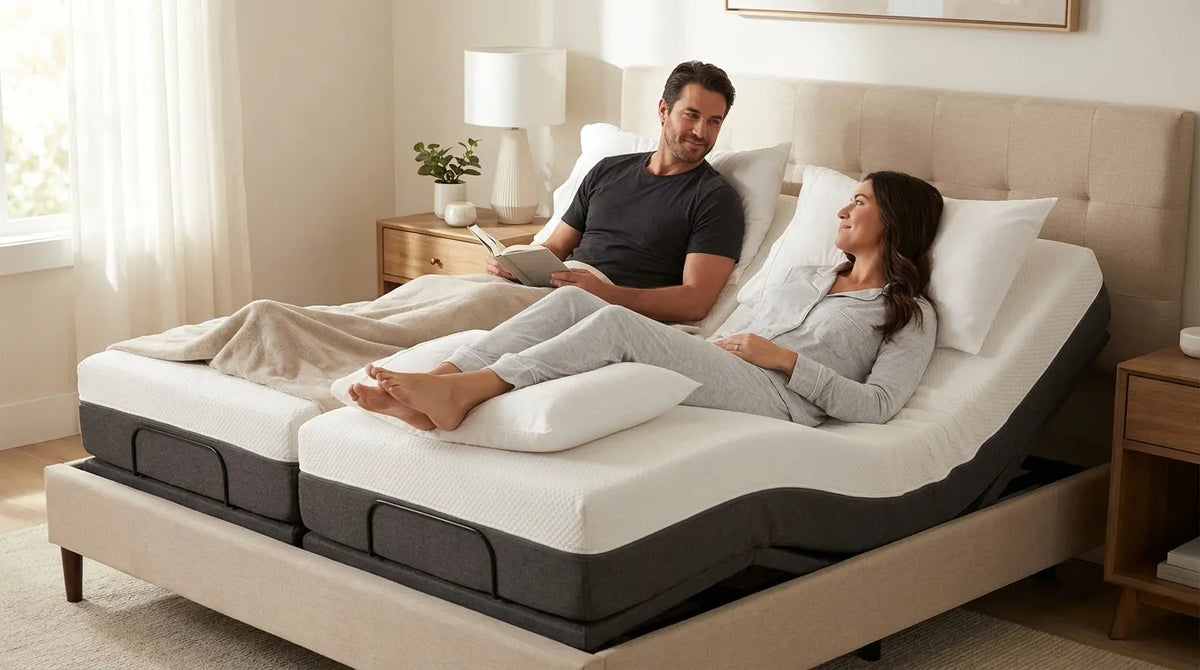
Adjustable positioning gives at-home sleepers and couples another way to relieve pressure without a clinical mattress. Elevating the head and knees in a zero gravity position distributes body weight more evenly, reduces pressure on the lower back, and supports circulation. The 2019 EPUAP/NPIAP/PPPIA International Guideline asks clinicians to consider an individual’s positioning needs over a full 24-hour period, including where and when they sleep, lie, and sit.
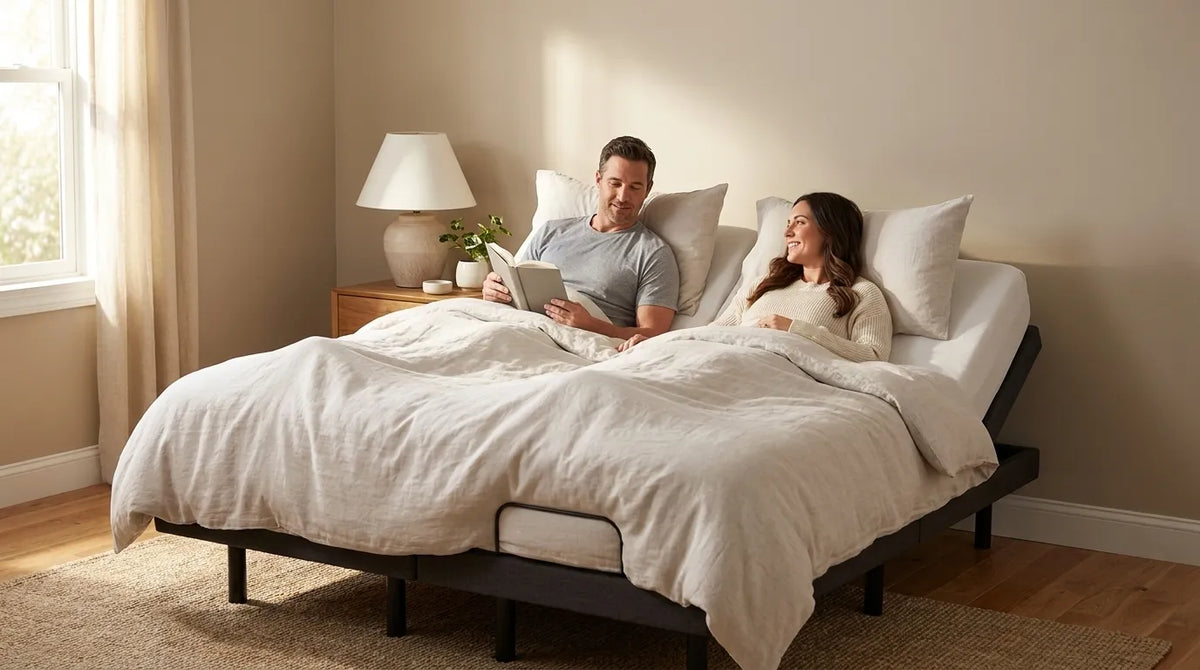
Leva Sleep is a specialist adjustable bed company that builds complete sleep systems for couples. Leva’s adjustable bases feature independent articulation, lumbar control, and pillow tilt so each partner can find positions that reduce pressure on hips, shoulders, and lower back. Mattresses are engineered to flex with the base, and bedding is designed for movement, so the system continues to perform at full elevation.
For couples with different needs, Leva offers Split Queen and Split King configurations with independent sides. The Split Queen collection offers five packages from $1,399, with 30″ × 80″ mattresses that Leva manufactures. The Duet Split King Adjustable Bed provides two Twin XL mattresses on independent bases.

Explore Leva’s pain relief collection to see how positioning and surface choice work together.
What Pressure Relief Mattresses Cannot Replace In Care
Pressure relief mattresses do not replace repositioning. The 2019 EPUAP/NPIAP/PPPIA International Guideline states clearly that “No support surface can entirely replace repositioning.” The guideline suggests two- or three-hourly repositioning for most people at risk who are also on an appropriate pressure redistribution surface. A 2026 systematic review and Delphi study published in BMC Nursing supports individualized repositioning schedules rather than a single fixed interval.
They also do not replace skin checks. Clinicians should inspect the sacrum, heels, occiput, and any area under a medical device at every position change. Checks should look for non-blanchable erythema, localized warmth, or changes in tissue consistency.
Wound care is a third element that a surface cannot substitute for. For existing pressure injuries, the support surface forms one part of a comprehensive plan that also includes debridement, dressings, nutrition, and moisture management.
Frequently Asked Questions About Pressure Relief Mattresses
Do Pressure Relief Mattresses Actually Work?
Clinical evidence supports their use, although certainty levels vary by surface type and outcome. A 2021 Cochrane systematic review found that reactive air surfaces may reduce the proportion of participants developing a new pressure ulcer compared with foam surfaces (risk ratio 0.42, 95% CI 0.18 to 0.96; low-certainty evidence). The same review found that people using reactive air surfaces may be more likely to have pressure ulcers completely healed than those using foam surfaces (risk ratio 1.32, 95% CI 0.96 to 1.80; low-certainty evidence). The 2026 International Pressure Injury Guideline strongly recommends pressure-redistribution foam surfaces for individuals at risk, noting that the risk of harm in not using one is very high, even though the underlying evidence certainty is low.
Do You Put A Sheet Over A Pressure Mattress?
Yes, but the sheet must be breathable and properly fitted. As noted in Step 4, a non-breathable or overly tight sheet can block airflow on a low-air-loss mattress and defeat its microclimate function. Any linen used should follow the manufacturer’s fitting instructions. Leva Sleep designs its sheet sets with extra elastic and deep pockets to maintain fit at full elevation on an adjustable base, which standard sheets often fail to do.
What Are The Disadvantages Of Pressure Relief Mattresses?
Powered systems require electricity and are vulnerable to power outages, so caregivers should plan for what happens when the pump stops. The pump may produce a persistent hum that disturbs sleep. Cost varies widely at the consumer level. Some users report heat retention from certain covers, particularly vinyl covers that trap warmth and moisture against the skin. Foam mattresses have a usable lifespan of roughly 3 to 5 years before they lose their pressure-redistribution properties, while alternating pressure covers typically need replacement every 2 to 3 years.
Do Pressure Relief Mattresses Replace Repositioning?
They do not. Every major clinical guideline is explicit on this point. The 2019 EPUAP/NPIAP/PPPIA International Guideline states that repositioning is good practice “regardless of the type of pressure redistribution full body support surface being used.” The interval may be adjusted based on the surface’s capabilities and the individual’s response, yet repositioning remains necessary. A 2026 home-care care bundle published in BMC Nursing recommends individualized repositioning schedules as part of pressure injury prevention.
How Does Adjustable Positioning Complement A Pressure Relief Mattress?
Adjustable positioning addresses pressure through body geometry rather than surface material alone. Elevating the head and knees in a zero gravity position distributes body weight more evenly across the back and reduces concentrated load on the lower back and sacrum. For at-home sleepers who have been advised to sleep elevated or who experience chronic pressure in the hips, shoulders, or lower back, an adjustable base adds a capability that no flat mattress can provide. Leva Sleep’s adjustable bases offer independent per-side articulation, lumbar control, and pillow tilt so each partner can dial in a position that reduces pressure without introducing a clinical-looking bed.
Conclusion: Build A Complete Pressure Relief Plan
Pressure relief mattresses work by redistributing body weight and reducing concentrated pressure on bony prominences. Static foam, alternating air, and hybrid designs achieve this through different mechanisms that match different risk levels and mobility profiles. A complete approach also includes regular repositioning, routine skin checks, and thoughtful positioning for at-home sleepers.
Couples who want to share a bed while addressing pressure, pain, or medical positioning needs can use Leva Sleep adjustable systems to bring these elements together. Independent articulation, lumbar control, and flexible mattresses support pressure relief through position, night after night, in a bedroom that still feels like home.
Visit Leva Sleep Online Or In La Jolla