Best Pressure Relief Mattress Materials: A Comparison Guide
Written by: Matthew Timmins, Founder and Managing Director, Leva Sleep
Key Takeaways
- Memory foam delivers the deepest contouring and lowest peak pressures, ideal for side sleepers with shoulder or hip pain.
- Latex offers responsive contouring with better support and cooler sleep, suiting back, stomach, and combination sleepers.
- Hyper-elastic gel grids provide targeted pressure relief and strong airflow, helpful for hot sleepers who dislike a “stuck” feeling.
- Hybrid mattresses rely on the comfort layer for pressure relief, so quality foam or latex above pocket coils is essential.
- Pairing the right pressure-relief material with an adjustable base maximizes comfort, so explore Leva Sleep's adjustable sleep systems today.
How Mattresses Relieve Pressure on Joints
Pressure relief describes how well a mattress contours to your body, spreads weight across the surface, and eases stress on pressure points like hips, shoulders, and heels.
When a mattress does not contour enough, body weight concentrates on the widest, heaviest points. Side sleepers feel this most because the shoulder and hip carry much of the load on a small surface area. Research published in journals including the Journal of Tissue Viability shows that sustained interface pressure above about 32 mmHg, roughly capillary closing pressure, begins to impede blood flow in soft tissue, a threshold documented by the National Pressure Injury Advisory Panel. On a firm innerspring mattress, a 150‑lb side sleeper can generate shoulder interface pressures above 80 mmHg. A memory foam or latex mattress with enough conforming depth usually brings that number below 40 mmHg.
Poor pressure relief causes tossing and turning as your body shifts to redistribute weight. Sleep becomes fragmented, and you wake with sore spots. A mattress that relieves pressure well keeps the spine near neutral alignment and lets the heaviest points sink just enough to spread the load.
Head-to-Head: How Each Material Relieves Pressure
Memory Foam: Deep Contouring for Sensitive Joints
Memory foam (viscoelastic polyurethane foam) softens with body heat and molds to your shape over 30–90 seconds. This deep contouring spreads weight across a wide surface area, which is why memory foam performs so well in pressure-mapping tests. When you evaluate memory foam, look for density ratings of at least 3.5–4 lbs/ft³ in the comfort layers.
Pros:
- Exceptional pressure relief and excellent motion isolation for partners.
- Often the top choice for side sleepers with shoulder or hip pain.
- Pressure-mapping tests show memory foam produces lower peak contact pressures at the shoulder and hip for side sleepers than natural latex. Read the study.
Cons:
- Tends to retain more heat than latex or coils.
- Slow response time can make repositioning feel harder.
- Low-density versions under 3 lbs/ft³ often develop body impressions within 2–3 years.
Best for: Side sleepers, especially under 230 lbs, who put pressure relief first and do not sleep hot.
Latex: Responsive Contouring With Cooler Sleep
Latex provides a buoyant, springy contour that supports the body instead of letting it sink deeply. A study in the Journal of Chiropractic Medicine found that a latex mattress reduced peak pressure on the torso and buttocks by up to 35% compared with standard foam. The mattress kept over 90% of the body’s contact area in the lowest pressure zone. Beyond pressure relief, natural latex made with the Dunlop or Talalay process is also one of the most durable mattress materials. Latex mattresses typically last 15 to 20 years, far longer than the 7 to 10 year lifespan of polyurethane foam mattresses.
Pros:
- Excellent pressure relief with more underlying support than most memory foam.
- Open-cell structure sleeps about 2.5–3.5°F cooler than memory foam.
- Naturally antimicrobial and dust-mite resistant, with the longest typical lifespan of any mattress material.
Cons:
- Higher upfront cost and more motion transfer than dense memory foam.
- Some side sleepers under 150 lbs find it too firm and want deeper contouring.
Best for: Back and stomach sleepers who want pressure relief without deep sinkage, hot sleepers, combination sleepers, and buyers focused on durability.
Hyper-Elastic Gel Grid: Targeted Relief With Strong Airflow
Purple’s GelFlex Grid, a hyper-elastic polymer first used in medical cushions, uses column buckling to relieve pressure. When a shoulder or hip presses down, the grid columns directly under that point collapse to near-zero resistance. Surrounding columns stay upright and carry the remaining load. When you compare gel grid mattresses, pay close attention to temperature control ratings and pressure-relief performance.
Pros:
- Outstanding cooling, measured at about +1.4°F above ambient versus +5.2°F for gel memory foam.
- Immediate response for easy repositioning and consistent pressure relief across positions.
Cons:
- Unusual feel that often takes 3–5 nights to adjust to.
- Weaker edge support than coils or high-density foam rails.
- Less effective for sleepers over 230 lbs who may sink too deeply into the grid.
Best for: Hot sleepers, side and back sleepers up to 230 lbs, and combination sleepers who want pressure relief without feeling stuck.
Pocket Coils in Hybrids: Support With a Cushioning Top
Individually wrapped pocket coils form the support core in hybrid mattresses. They adapt independently to body contours and help prevent the bottoming-out that can happen with some all-foam beds. The comfort layer above the coils handles most of the pressure relief. When you shop for hybrids, remember that the foam or latex layers provide the primary cushioning for joints. Testing of hybrids with a 4‑inch poly foam comfort layer over pocketed coils recorded side-sleeper pressures of 0.54 PSI. This result confirms that comfort layer quality, not the coils, drives pressure-relief outcomes.
Pros:
- Strong support and spinal alignment with better airflow than most all-foam designs.
- Good edge support and a responsive feel that makes repositioning easier.
Cons:
- Pressure relief depends entirely on the comfort layer, so thin or low-density layers over coils perform poorly.
- Hybrid mattresses last about 6.5 to 7.5 years on average.
Best for: Back and stomach sleepers who need support plus contouring, heavier sleepers over 230 lbs, and hot sleepers who want more airflow.
Pressure Relief Materials Comparison Table
| Material | Peak Pressure Reduction | Temperature Rise Above Ambient | Expected Lifespan | Best For |
|---|---|---|---|---|
| Memory Foam | About 40% reduction vs. innerspring | +5.2°F | 7–10 years | Side sleepers; motion isolation |
| Latex | Up to 35% reduction vs. standard foam | About 2.5–3.5°F cooler than memory foam | 15–20 years | Back/stomach sleepers; hot sleepers |
| Hyper-Elastic Gel Grid | Not specified | +1.4°F | 6.5–7.5 years | Hot sleepers; combination sleepers |
| Pocket Coils (Hybrid) | 0.54 PSI for side sleepers in testing | Low to moderate | 6.5–7.5 years | Heavier sleepers; back sleepers |
What Materials to Avoid for Pressure Relief
Some mattress builds consistently fall short on pressure relief and long-term comfort.
Low-density polyfoam in the support core: Low-density polyfoam under about 1.5–1.8 lbs/ft³ in the support core is a common shortcut that leads to rapid sagging. Sagging undermines both pressure relief and support. As noted earlier, memory foam comfort layers should use densities of at least 3.5–4 lbs/ft³ to reduce the risk of early body impressions.
Overly firm innersprings with thin comfort layers: Traditional open-coil innersprings, such as Bonnell or continuous coils, push back uniformly instead of contouring. On a firm innerspring mattress, a 150‑lb side sleeper can generate shoulder interface pressures above 80 mmHg, which sits well above the 32 mmHg tissue-pressure threshold mentioned earlier. If you prefer an innerspring feel, look for a hybrid with individually wrapped pocket coils and at least 2–3 inches of quality foam or latex on top.
Materials that feel very soft without solid support: A mattress that feels plush but lacks a strong core lets the hips sink too far. This pull on the spine strains the lower back. A support core density below about 1.5 lbs/ft³ for polyurethane foam tends to sag early and disrupt spinal alignment. A thick comfort layer of quality foam over a high-density support core of 1.8 lbs/ft³ or higher works far better.
Choosing Materials by Sleep Position and Body Weight
About 70% of adults sleep on their side, which puts the most pressure on shoulders and hips. These sleepers usually need a material that lets those joints sink in, such as memory foam, soft latex, or a hyper-elastic gel grid. Aim for a comfort layer of at least 3 inches. Side sleepers generally do best on softer to medium-soft surfaces, around 3 to 5 on a 1-to-10 firmness scale.
Back sleepers need a mix of support and pressure relief to maintain the lumbar curve. A medium-firm mattress, about 6 to 7 out of 10, often works best. Medium-firm latex or a hybrid with a quality comfort layer usually fits this need. A surface that feels too soft lets the pelvis sink and flattens the lumbar curve. A surface that feels too firm creates pressure at the sacrum and shoulder blades.
Stomach sleepers usually need the firmest surface, around 6 to 8 on a 10‑point firmness scale, to keep the midsection from sinking and hyperextending the lower back. Memory foam often allows too much hip sinkage for strict stomach sleepers, so latex or a firmer hybrid tends to work better.
Body weight also changes how a mattress feels. If you are under about 130 pounds, a mattress labeled medium-firm often feels firmer because you compress the materials less. If you are over about 230 pounds, you compress materials more deeply, so a firmer option can feel closer to medium-firm. Lighter sleepers usually need softer materials for contouring. Heavier sleepers benefit from higher-density foams and coil support to prevent bottoming out.
Why Adjustable Bases Matter for Pressure Relief
Even the most pressure-relieving material on a flat mattress still holds your spine in one basic geometry for many hours. A flat surface concentrates body weight on the points that project the most, such as hips and shoulders, whether the mattress uses memory foam, latex, or a gel grid.
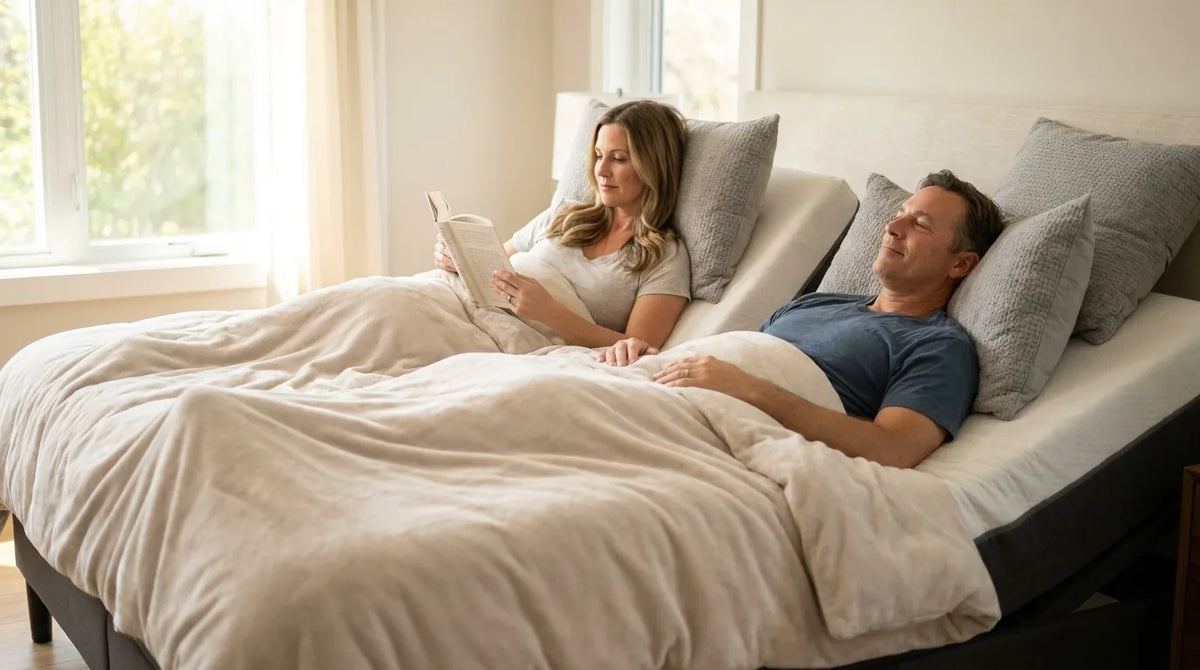
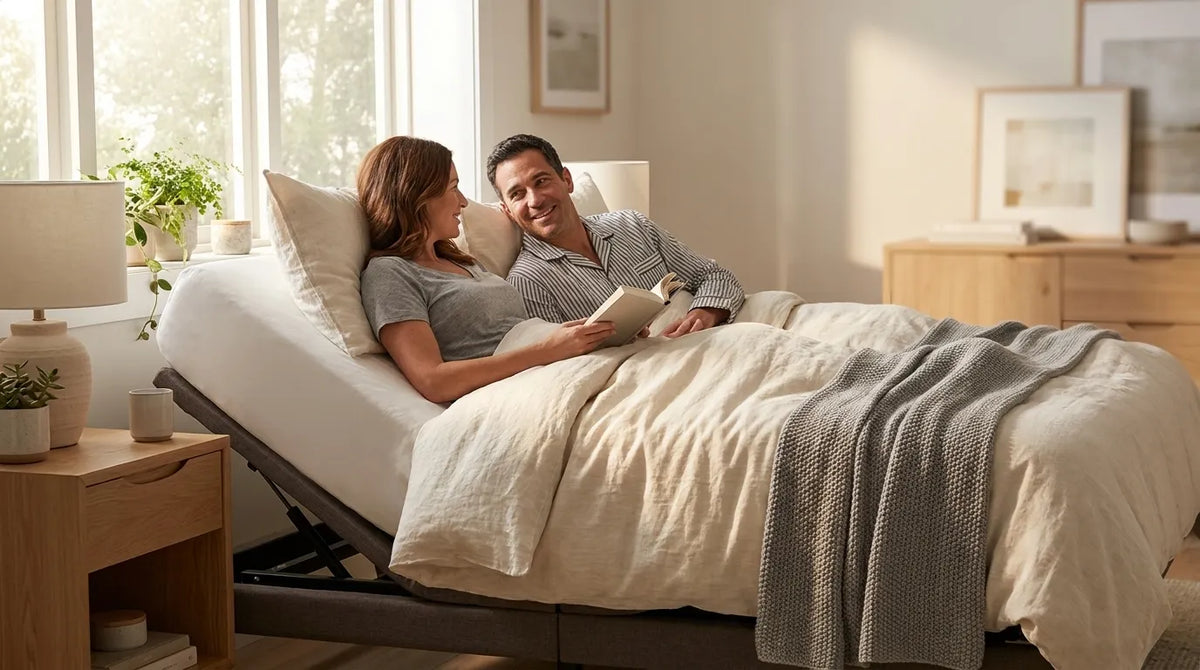
An adjustable base changes how your body meets the mattress. Elevating the head by 15 to 30 degrees reduces pressure on the cervical spine. Elevating the legs by 10 to 15 degrees eases pressure on the lumbar region. The zero-gravity position, with the head and knees slightly raised, spreads body weight more evenly across the mattress and supports circulation. Clinicians often recommend sleeping with the head elevated for conditions such as sleep apnea, acid reflux, and post-surgical recovery. An adjustable base lets you hold that position every night without stacking pillows.
Leva Sleep is a specialist adjustable bed company with one of the largest selections of Split Queen adjustable beds in North America. Its mattresses are engineered to flex with the base. By pairing the right pressure-relief material with personalized positioning, you can reach a level of pressure relief that a flat mattress cannot match. Complete adjustable bed packages start at $1,299 and include a 180-night comfort guarantee.

Explore Leva Sleep's adjustable sleep systems and see how they change pressure relief for you.
Frequently Asked Questions
What type of mattress is best for pressure relief?
Memory foam provides the deepest contouring and performs very well in pressure-mapping tests, so it often works best for side sleepers with shoulder or hip pain. Latex offers similar pressure relief with more support and cooler sleep. Hyper-elastic gel grids give targeted relief with strong airflow. The right choice depends on your sleep position, body weight, and heat sensitivity. Many side sleepers start with memory foam or soft latex, while hot sleepers often prioritize a gel grid or latex hybrid.
What material should I avoid in a mattress?
Avoid low-density polyfoam under about 1.5–1.8 lbs/ft³ in the support core and under about 3.5 lbs/ft³ in memory foam comfort layers, because it tends to sag and lose pressure-relieving ability within a few years. Also avoid very firm traditional innersprings with thin comfort layers, which concentrate pressure at the hips and shoulders. Materials that feel very soft without enough support underneath cause the hips to sink too far and pull the spine out of alignment.
Is memory foam or latex better for pressure relief?
Memory foam usually provides deeper contouring and lower peak pressures for side sleepers. Latex runs cooler, lasts longer than polyurethane foam, and offers stronger support for back and stomach sleepers. For pressure-focused pain at the hips or shoulders, memory foam’s deeper conforming often feels better. For support-focused pain such as hips sagging or a collapsing lumbar curve, latex’s firmer push-back often improves alignment. Hot sleepers usually do better on latex regardless of position.
Do I need a hybrid mattress for pressure relief?
Many all-foam mattresses with quality memory foam or latex comfort layers provide excellent pressure relief. Hybrids add a pocketed coil support core, which improves airflow, edge support, and responsiveness. These traits help heavier sleepers over 230 lbs, hot sleepers, and combination sleepers. The comfort layer still determines pressure-relief quality. A hybrid with a thin or low-density comfort layer will not relieve pressure well, while an all-foam mattress with a thick, high-density comfort layer can perform better.
How does an adjustable bed help with pressure points?
An adjustable bed lets you change your position relative to the mattress and move weight away from pressure points. Elevating the head slightly reduces pressure on the cervical spine and can open the airway. Elevating the legs eases pressure on the lumbar region. The zero-gravity position spreads weight across the body and reduces pressure on hips, shoulders, and lower back. A complete sleep system that combines the right mattress material with an adjustable base delivers pressure relief that a flat mattress cannot match on its own. Leva Sleep’s adjustable systems are built for this purpose, with mattresses designed to flex smoothly with the base.
Conclusion: Choose the Right Material, Then Add Adjustability
The strongest pressure-relief mattress materials include memory foam for deep contouring, latex for responsive support with cooler sleep, hyper-elastic gel grids for targeted relief with airflow, and pocket coils in hybrids for support plus contouring. Avoid low-density polyfoam and very firm innersprings with thin comfort layers. Match your mattress to your sleep position and body weight. Side sleepers usually need softer contouring, back sleepers need balanced support, and stomach sleepers need a firmer surface.
Material selection covers only part of pressure relief. A flat mattress still concentrates load on the hips and shoulders. An adjustable sleep system lets you change position, redistribute weight, and improve spinal alignment so you get more from whichever material you choose. Leva Sleep pairs its mattresses with adjustable bases designed to flex together, so you experience the full benefit of both.
Visit the La Jolla showroom to try Leva Sleep's adjustable systems in person.